
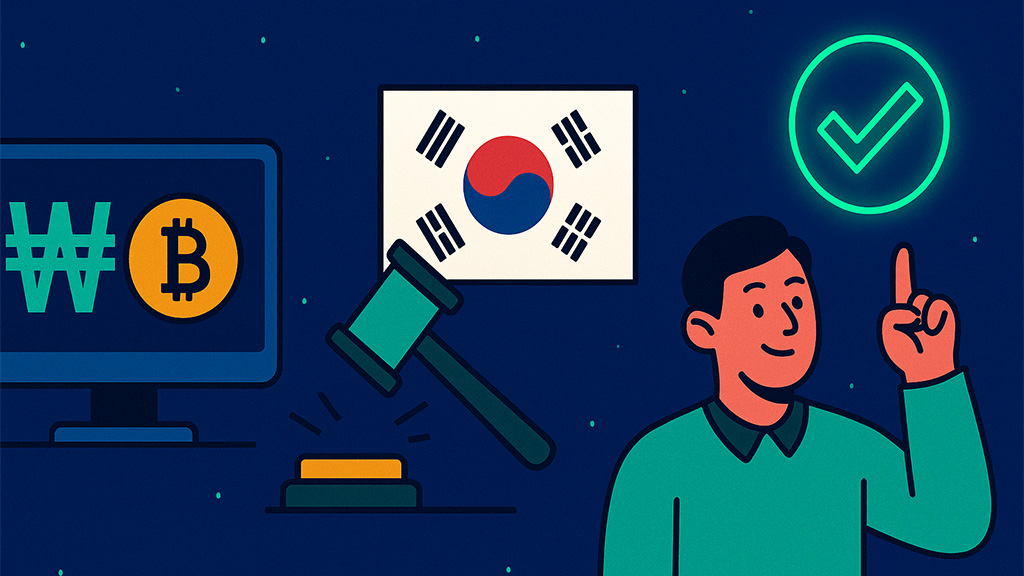
As South Korea continues to refine its cryptocurrency regulatory framework, the landscape for trading, futures, and exchange platforms is evolving rapidly. With the government’s five-year administrative plan incorporating digital assets as a national priority, and reforms like the proposed Digital Asset Basic Act (DABA) set to take effect in 2025, investors are eyeing opportunities in spot trading, stablecoins, and potentially spot ETFs. However, strict compliance requirements, including real-name trading and enhanced KYC protocols, remain central to the market.
Regulatory Landscape: A Shift Toward Institutional and Retail Growth
South Korea’s Financial Services Commission (FSC) has been proactive in 2025, introducing reforms to allow institutional crypto trading by the third quarter and permitting non-profits and exchanges to sell digital assets under new rules. The Virtual Asset Service Provider (VASP) regime mandates registration for all exchanges, with only five platforms—Upbit, Bithumb, Coinone, Korbit, and Gopax—fully licensed as of April 2025. Real-name trading, enforced since 2021, requires users to link accounts to verified bank details, ensuring anti-money laundering (AML) compliance.
Futures and derivatives trading face tighter scrutiny. While retail crypto futures remain largely restricted on domestic platforms, some exchanges like Bithumb have introduced leverage options, such as crypto-backed loans with up to 4x leverage on assets like Bitcoin and Ethereum, starting July 2025. The FSC is eyeing leverage limits to curb risks though, amid outflows of over 56 trillion won from Korean exchanges in Q1 2025, much of it shifting to international platforms.
Meanwhile, spot crypto ETFs and won-pegged stablecoins are on the horizon, with a regulatory roadmap outlining custody rules and valuation standards. These changes, coupled with international partnerships like Upbit’s latest venture to launch Vietnam’s first licensed exchange, highlight Korea’s growing influence in Asia’s crypto ecosystem.
Domestic Exchanges: Compliance-First Platforms
Korea’s “Big Four” exchanges—Upbit, Bithumb, Coinone, and Korbit—dominate the market, offering spot trading in KRW pairs and emphasizing security amid regulatory pressures.
- Upbit: As the largest exchange by volume, Upbit supports over 150 KRW pairs and is known for robust compliance. Upbit faced scrutiny in July 2025 over potential KYC lapses, risking hefty fines, underscoring the need for users to prioritize secure practices. Futures are not directly offered, but users can access margin trading indirectly through linked services.
Registration: Download the app or visit the website, provide personal details, and link a bank account from partners like K Bank.
KYC Verification: Mandatory real-name system requires resident registration or passport, with facial recognition and bank verification completing the process in minutes.
Security Settings: Enable two-factor authentication (2FA) via Google Authenticator, set withdrawal whitelists, and use cold wallet storage.
- Bithumb: Supporting 200+ coins with deep liquidity, Bithumb introduced leverage loans in July 2025, allowing up to 4x on select assets.
Registration: Sign up via app or website, requiring a Korean phone number and bank linkage (recently transitioned to KB Kookmin Bank).
KYC Verification: Full AML checks include ID submission, bank confirmation, and video verification for higher limits.
Security Settings: Activate 2FA, biometric logins, and anti-phishing codes; the platform uses multi-signature wallets and regular audits.
- Coinone and Korbit: These platforms focus on secure spot trading.
Registration: Similar to others, with bank partnerships for real-name accounts.
KYC Verification: Strict, involving document uploads and bank ties.
Security Settings: Both offer 2FA, IP restrictions, and cold storage, with Korbit emphasizing enterprise-grade encryption.
International Exchanges: Accessibility for Korean Traders
Korean users often turn to global platforms for futures and derivatives, which are more readily available despite domestic restrictions. However, compliance with Korean tax laws and using VPNs for access may be necessary.
- Binance: Widely used by Koreans for futures trading with up to 125x leverage on perpetual contracts.
Registration: Select South Korea during signup, install the app, and enter basic info.
KYC Verification: Required for full access; submit passport or resident ID, with facial scan for Level 1 (basic) or Level 2 (advanced) verification.
Security Settings: Enable 2FA, IP whitelisting, and device management; Binance employs cold storage and advanced monitoring. Korean users can buy BTC directly post-2025 updates.
- Bybit: Popular for derivatives, offering perpetual futures with up to 100x leverage. South Korea is not restricted, allowing access.
Registration: Quick signup via email or phone.
KYC Verification: Multi-level; no KYC allows up to 20,000 USDT withdrawals daily, but full services require ID and proof of address.
Security Settings: 2FA, withdrawal passwords, and AML monitoring; the platform suffered a major hack in February 2025 by North Korean actors, stealing $1.5 billion, highlighting the importance of user vigilance.
- Huobi Global (HTX): Supports futures trading with competitive fees and liquidity. Available to Korean users from over 180 countries.
Registration: Via website or app, with email verification.
KYC Verification: Mandatory for trading; submit ID and selfie for compliance with global standards.
Security Settings: 2FA, fund passwords, and cold/hot wallet segregation; HTX emphasizes regulatory adherence to prevent issues like tax evasion.
For Korean traders looking to deepen their knowledge of international futures trading, there’s a number of platforms such as CoinGosu offering comprehensive information on cryptocurrency exchanges, futures strategies, and promotional tools. This can help users optimize fees and stay updated on global trends while navigating local regulations.
Emerging Trends and Investor Advice
Retail investors are increasingly shifting to Ethereum-related assets, while stablecoin regulations accelerate amid a pause on the Digital Won project. With spot ETFs on the way, experts recommend prioritizing licensed platforms and enabling all security features to mitigate risks like hacks or fines. As Korea balances innovation with protection, traders should stay updated on FSC guidelines to navigate this dynamic market effectively.
Disclaimer
This article is for informational purposes only. The information does not constitute investment advice or an offer to invest. The views and opinions expressed in this article are solely those of the authors and do not reflect the views of Crypto Events. Every investment and trading move involves risk – this is especially true for cryptocurrencies given their volatility. We strongly advise our readers to conduct their own research when making a decision.